HR trends shaping the future of work

The world of work is changing, fast. And look, we know we’re not telling you something you don’t already know; but it’s the reality. If you caught our last rundown of HR trends, you know just how much is changing and how fast. So for business owners and HR professionals, it can be really tricky to keep up. 

As easy as it might feel to continue with the tried and tested methods of running your business, it’s getting to a stage where ignoring upcoming workplace trends is no longer an option. For businesses in 2026, staying ahead of emerging HR trends is a surefire way of moving away from your business surviving, to it thriving. 

We’re cutting through the noise to bring you some of the HR trends that actually matter for 2026. No fluff, just the insights you need to build a resilient, future-ready business. 

Ready to see what’s coming? Let’s dive in.

AI and automation

Starting off strong with Artificial Intelligence (AI) and automation. Over the last couple of years, AI and automation are things you’ve probably heard a lot about. And with Employment Hero’s Work That Works report showing that 44% of employees use AI tools or apps in their job, it’s becoming harder to ignore the fact that AI and automation are no longer futuristic concepts that sit alongside flying cars, instead they’re practical, everyday tools businesses can harness. 

It’s no secret that the rapidly growing workplace trend of AI and automation has caused many people to feel concerned for their jobs. However, to get the most out of these tools, it’s not about replacing people, it’s about empowering them to achieve more. What’s not to like?

But the real magic happens when you strike the perfect balance between automation and human judgement. 

These tools are best when thought of as a sidekick for your team. Let AI handle the tedious, repetitive, time consuming tasks that bog down your employees so they can focus on strategic initiatives, client relationships and innovating. You know, all the things that require a bit of human touch.  

But let’s be real, adopting AI isn’t without its hurdles. It’s easy to become dependent on these tools, which can lead to a decline in critical thinking skills or a loss of that essential human touch. This is something you definitely want to avoid. 

So if you want to stay ahead of the curve in 2026 by utilising AI and automation, while also navigating the challenges successfully, you need a plan: 

  • Set clear guidelines: Define how and when AI should be used.
  • Prioritise ethics: Establish protocols to ensure fairness, transparency and accountability.
  • Invest in training: Equip your team with the skills to work alongside AI effectively, not just depend on it.

By tackling these challenges head-on, you can harness the power of automation to not only streamline operations but also to build a more dynamic, forward-thinking and human-centric workplace.

Upskilling through micro-learning

Off the back of the AI and automation workplace trend, we will be seeing a shift in not only how people work, but what they do. For many businesses, the most valuable employees will be the ones who can adapt, learn and grow alongside technology. 

So instead of losing your best people to change, upskill them through micro-learning. Business owners and HR professionals should think of micro-learning as their secret weapon in a world moving at AI speed. Instead of long, drawn-out courses, employees get bite-sized, focused lessons that fit into the flow of work, where and when they need it most… handy, right? 

With micro-learning, you’re equipping your people to adapt, stay ahead of AI-driven change and keep pushing your business forward, without missing a beat. 

Here’s how you can champion your team and get ahead of the curve:

  • Make learning bite-sized: Break down complex topics into quick, focused modules your team can complete in moments—not hours. Replace marathon training sessions with five-minute videos, interactive quizzes or simple checklists tailored to your day-to-day business challenges.
  • Meet people where they are: Use mobile apps and on-the-go platforms to put learning in your team’s pocket. Whether they’re on a break or heading between jobs, they can access training when it suits them—no more waiting for a scheduled session.
  • Keep skills relevant: Regularly update your micro-learning content to reflect current skills needs, trends, or changes in your industry. Focus on high-impact areas like problem solving, creative thinking and communication that help your team stay ahead of tech shifts.

By empowering your team with the skills of tomorrow, you’re not just preparing for the future—you’re building it. You’re creating a resilient, capable, and loyal workforce that will be your greatest asset in the AI era.

Psychological safety and trust

Let’s get really honest for a moment; trust is the glue that holds any successful business together. Without it, you might have people working for your business, but you don’t have a team. As we move into 2026, an important HR trend we will be seeing more of is building a culture of psychological safety. 

But before we dissect what this actually means for your business, it’s important to make sure everyone is on the same page about what psychological safety at work actually is. 

In its simplest form, psychological safety means your team feels safe to speak up, make mistakes and bring their whole selves to work, knowing they’ll be supported. It’s about creating a space where “I don’t know” is an acceptable answer and “I made a mistake” is the start of a learning opportunity. It’s essential for open communication, learning and high performance. These are all good things for businesses, right?

We get it, you’re probably thinking that this is how every business wants their team to feel. But for many companies, psychological safety isn’t just something that happens, it’s intentionally improved by business owners and HR professionals. So for SMEs with a million things on their to-do list, it might sound like another heavy lift, or perhaps something to focus on later down the line.

But here is the reality; you can’t afford a silent workforce. Innovation dies in silence. And improving psychological safety in your organisation isn’t as time consuming as you might think. Here is how you can rebuild trust and foster genuine safety in 2026:

  • Normalise vulnerability: Leaders need to go first. Admit when you are wrong. Share your challenges. When you show you’re human, you give your team permission to be human too.
  • Radical transparency: Be open about company decisions, even the tough ones. Uncertainty breeds anxiety; clarity builds trust.
  • Listen to understand, not to respond: Create meaningful feedback loops where employees feel heard, valued and understood.

Lifting the conversation around trust doesn’t just make people feel better, it makes them work better. When your employees know they are safe and valued, they stop looking over their shoulders and worrying about making mistakes. Instead they begin to look forward and come to you with new ideas which could drive your business towards success. 

Your people feel safer and your business is innovating. It’s a win-win. 

Recognition culture

Let’s talk about one of the most overlooked, yet powerful, tools in your arsenal; saying “thank you.” It sounds almost too simple, but when everyone is busy hitting targets, it’s often the first thing to fall by the wayside. And we have proof of this, the Work That Works report found that half of all employees don’t feel recognised enough in their jobs. But it has a huge impact on performance with the report showing that when employees feel their work is recognised, they are 33% more likely to go ‘over and above’ what is expected. On top of this, businesses who rate themselves well for employee recognition are 40% less likely to have retention problems.

So as we look to 2026, recognition culture should be front of mind. But don’t panic, this doesn’t have to be expensive. It’s just about acknowledging the daily wins and the hard work that moves your business forward.

The data we mentioned above doesn’t lie, when your people feel seen and valued, something shifts. Morale goes up, collaboration improves and people stick around. For you, this means a more stable, motivated team that requires less hand-holding and delivers better results. It’s the cheapest, fastest way to boost your bottom line. What could be better?

Here’s how to start without overcomplicating recognition:

  • Make it public and peer-to-peer: Create a dedicated method for recognition, such as a Slack channel, a section in your team meeting or a board in the breakroom, for employees to give each other shoutouts. Recognition from peers often means more than from the top down.
  • Equip your managers: Your managers are on the front line. Train them to give specific, timely and genuine feedback. Ditch the annual review as your only feedback point and encourage them to catch people doing things right…right now.
  • Keep it simple: Recognition doesn’t have to be complicated or monetary. A LinkedIn recommendation, shout out in a meeting, or even an extra hour off on a Friday can have a huge impact. The goal is to show you’re paying attention.

Recognition costs little, but delivers a huge impact. It turns your workplace into somewhere people want to be and proves their effort matters…and in doing so, makes your business stronger from the inside out.

Employee driven culture

As a business owner or HR professional, you know better than anyone that your employees are your company’s biggest asset. For too long, teams were treated as replaceable. But if you want to attract and retrain top talent, it’s time for a shift. 

But what’s the best way of doing this? Through creating an employee driven culture. This might sound daunting for business owners, but focusing on employee engagement and an employee driven culture  is going to change your business for the better. 

This shift is full of opportunity for business owners who are ready to harness it. When employees are empowered to share their ideas, drive improvements and advocate for what matters, your business gets better—smarter, faster and stronger. 

But when it comes to this workplace trend, how can you harness the opportunity to supercharge your business as a whole? It starts with changing your mindset from feeling intimidated by it, to being excited about it. By working with, not against, your employees’ passion and ideas, you unlock new energy and innovation across your business. 

Here’s how you can turn this momentum into real growth for your business:

  • Democratise communication: Move beyond the suggestion box. Create open forums where feedback is actually addressed, not just acknowledged.
  • Prove your equity: Be transparent about pay, promotion pathways and decision-making. Trust is the currency of 2026, and you earn it by showing your work.
  • Walk the walk: If your team flags a values misalignment, take it seriously. Authenticity matters more than PR statements.

When you empower your people to help shape your culture, you transform your workforce into champions for your business. Suddenly, you’re not just leading a team, you’re rallying passionate advocates who will drive your company forward. 

Empowering your team in 2026

The world of work is moving at lightning speed and there are lots of HR trends to keep on your radar. However, there’s one thing that connects all of the workplace trends we’ve discussed; the future is built by people, for people. 

From harnessing AI and automation to navigating the return-to-office debate, the common thread is putting your team at the center of your strategy. The rise of employee-driven culture, the demand for psychological safety and the need for genuine values alignment aren’t just passing fads—they are fundamental shifts in how great businesses are built.

For you, as a business owner or HR professional, this should be seen as the ultimate opportunity. By embracing these changes, you can stop reacting and start leading. It’s your chance to build a magnetic culture where people are empowered to do their best work, driving innovation and growth. 

Looking for support navigating employment in 2026?

Berita Terkini

Berita Terbaru

Daftar Terbaru

News

Berita Terbaru

Flash News

RuangJP

Pemilu

Berita Terkini

Prediksi Bola

Technology

Otomotif

Berita Terbaru

Teknologi

Berita terkini

Berita Pemilu

Berita Teknologi

Hiburan

master Slote

Berita Terkini

Pendidikan

Resep

Cek Ongkir Cargo

Togel Deposit Pulsa

Daftar Judi Slot Online Terpercaya

Slot yang lagi gacor

Summer jobs sizzle out as wages heat up to 2.7%

London, 11 August 2025 – The traditional summer hiring surge is much slower this year than previous years, according to Employment Hero’s latest Jobs Report, which analyses employment and wage data for 105,000 workers at UK small businesses. 

The report shows that UK employment grew by 2.7% year-on-year in July, a sharp decrease from the 8.3% growth seen in the same period in 2024. This slowdown signals a cooling of the summer job market as businesses grapple with higher labour costs.

Despite slower job growth, wages continue to rise. Salaries increased by 2.7% year-on-year in July, a noticeable jump from the 0.7% growth recorded in July 2024. This increase in pay comes as employers contend with inflationary pressures which is leading to higher wage offers to attract and retain workers.

Gen Z sees the biggest wage jump

Wage growth is particularly pronounced among younger workers, with Gen Z (aged 18-27) seeing the largest increase. Gen Z wages grew by 5.6% year-on-year in July, the highest of any age group. This surge is likely attributed to National Minimum Wage increases, which have impacted younger workers more significantly.

While higher wages are beneficial, they also pose challenges. The data suggests a shift in the labour market, as companies face difficulty balancing the need to attract talent with the rising cost of wages.

For jobseekers, particularly Gen Z, this means higher pay but potentially fewer opportunities compared to previous summers.

Commenting, Kevin Fitzgerald, UK Managing Director at Employment Hero, said:

“This summer slowdown highlights the growing challenges small businesses face. While wage growth is encouraging, especially for younger workers, the slowdown in job growth shows the pressure employers are under from rising costs. Higher wages may help attract talent, but they also limit businesses’ ability to hire more staff. We’re at a critical juncture. To sustain positive growth, we need to make hiring easier for small businesses and avoid policies that could prompt reactionary measures. But with another Autumn Budget looming, is this the calm before the storm? Only time will tell.”

Berita Terkini

Berita Terbaru

Daftar Terbaru

News

Berita Terbaru

Flash News

RuangJP

Pemilu

Berita Terkini

Prediksi Bola

Technology

Otomotif

Berita Terbaru

Teknologi

Berita terkini

Berita Pemilu

Berita Teknologi

Hiburan

master Slote

Berita Terkini

Pendidikan

Resep

Cek Ongkir Cargo

Togel Deposit Pulsa

Daftar Judi Slot Online Terpercaya

Slot yang lagi gacor

Holiday entitlement calculator (calculate leave for employees)

You might think holiday entitlement would be straightforward.

An employee gets a certain amount of days and they take those days, but what about when an employee works irregular hours?

 Or, an employee is leaving the company partway through a holiday?

Holiday entitlement calculation has a lot of nuance and complexity. It’s possibly one of the more complicated parts of payroll or human resources.

Believe it or not, a lot of companies unintentionally get holiday entitlement calculations wrong.

In this article, we include a holiday entitlement calculator, so you can calculate how much time off your employee is entitled to.

We also include an option to calculate holiday pay final payments for when an employee leaves.

We run through the formula for calculating holiday entitlement and walk you through examples of different employee scenarios.

This will help you to have a better understanding of holiday entitlement to know when a calculation might be wrong.

Here’s what we’ll cover:

Holiday Entitlement Calculator

The calculator has two parts:

Holiday entitlement calculator to calculate the statutory leave entitlement for an employee.

Holiday pay calculator will calculate how much payment in lieu of notice is to be paid if an employee is leaving.

Information you will need to complete the calculators includes:

  • Number of days of holiday entitlement, excluding public holidays.
  • Days in the work week
  • Days per week worked by this employee
  • If your employee is part time, the number of hours worked per day
  • Number of days per working week (this is usually five working days per week for full-time roles)
  • The holiday year start and end dates, which are usually 1 January to 31 December

Note: The calculator doesn’t include a provision for overtime and is to be used as a guide only.

What is the statutory holiday entitlement in the UK?

In the UK, employees are entitled to 5.6 weeks’ paid annual leave, which may include public and bank holidays depending on the employment contract.

Known as statutory leave entitlement, it means workers are financially protected when they take annual leave.

For full-time workers who work a 5-day week, this is a minimum of 28 days per year.

As a note, holiday entitlement is limited to 28 days.

Therefore, staff working a 6-day week are still only entitled to 28 days per year.

This protection sits within the Working Time Regulations 1998 (WTR), introduced in 1998. The entitlement was originally set at four weeks (20 days for a five‑day week), increasing in 2007 and again in 2009.

This increased to 24 days in 2007 and to 28 days in 2009.

Although there is a minimum requirement, employers can choose to offer a package that includes more holiday entitlement, but they cannot offer less than the minimum.

Large companies will often use a generous holiday policy as part of a package to tempt top talent. However, unlimited holiday policies might not cover full salary beyond the basic 28 days.

Does holiday entitlement include public and bank holidays?

Whether an employee gets paid for public holidays as part of their statutory leave entitlement, an enhanced allowance, or at all, depends on the employer’s policy and their employment contracts.

Annual leave in addition to bank and public holidays

For example, some contracts state, “in addition to bank and public holidays, annual leave entitlement is 20 days”, which means that bank holidays are paid for, and are included in the 28 days of holiday entitlement.

Annual leave inclusive of bank and public holidays

Sometimes, employers can enforce that their employees take holiday entitlement on public holidays if:

  • The public holiday falls on a day they would normally work
  • The office shuts down on the day.

However, these conditions must clearly be outlined in the employment contract, or the employee must be given adequate notice in advance.

Typically, these contracts outline annual leave entitlement using the wording “inclusive of bank and public holidays”. 

On the other hand, an employee may ask to work on the public holiday, they don’t have a legal right to work on a public holiday, so it’s up to you as their employer to either accept or refuse the request.

It’s important to note that the employee is not automatically entitled to extra pay or a day off in lieu of working on a bank holiday, unless this is agreed in the employment contract or by custom. However, all statutory annual leave must be paid.

Holiday entitlement leave year

The annual leave year is usually aligned with the calendar year from 1 January to 31 December.

Although, some companies might use an alternative start date such as the start of their financial year.

As an employer, you must tell your staff the dates of this statutory leave year when they start working with you.

When someone joins your company partway through the leave year, this will need to be factored into their holiday entitlement.

For example, if they start on 10 June and the usual annual leave start/end date is January to December, their holiday entitlement will be calculated on a pro-rata basis from 10 June onwards.

There is an option to create a new holiday year, but this is uncommon.

For example, if a new employee starts on 13 June, the start date for their annual leave year will be 13 June and the end date would be 12 June of the next year.

What happens in a leap year?

For salaried employees, there’s no automatic entitlement to another day of holiday entitlement due to a leap year.

If employees are accruing holiday pay, the extra day of work counts towards this accrual.

How to calculate holiday entitlement for part-time employees

Those working part-time hours are still entitled to the part-time equivalent of 5.6 weeks of statutory leave entitlement (or more, as contracted).

Importantly, if you as an employer give more than the minimum holiday pay to full-time employees, you’ll have to give these benefits to part-time employees to avoid discrimination.

Part-time employees receive holiday entitlement on a prorated basis. This means that their statutory leave entitlement is proportionate to the hours they work.

To calculate this, you’ll need to know:

  • Number of hours worked in the pay period
  • Number of full-time hours.

The formula is:

Number of hours worked per week / full-time hours per week x contracted days entitlement x full-time hours per day = hours of holiday entitlement

Example, for an employee working 25 hours per week:

25 / 37.5 x 28 x 7.5 = 140 hours of holiday entitlement

Note, a typical full-time employee works 37.5 hours per week, 7.5 hours per day, 5 days per week.

Part-time holiday entitlement based on 28 days holiday equivalent

Hours worked per week Annual holiday entitlement hours
5 28
10 56
15 84
20 112
25 140
30 168

How to calculate holiday pay for irregular working patterns or those working for part of the year

For seasonal workers, temporary workers, or those who work irregular hours, calculating their holiday entitlement used to be complicated.

The Working Time Regulations 1998 were amended by reforms effective January 2024, introducing new rules on holiday entitlement and pay for irregular‑hours and part‑year workers

These workers now accrue statutory holiday entitlement using an accrual method

For an employee who works only part of the year, or works irregular hours, their holiday entitlement is calculated at 12.07% of the hours they worked in the pay period. 12.07% is based on the statutory minimum holiday entitlement of 5.6 weeks.

For example, if they worked 25 hours and are paid weekly:

25 × 12.07 ÷ 100 = 3.02 or 3 days

For example, if a zero-hours employee works for 25 hours in June, they will receive 25 x 12.07%= 3.02 hours, rounded to 3 hours of holiday leave entitlement.

This will accrue until they want to take a holiday, or if they leave.

From 1 January 2024, rolled-up holiday pay is permitted again for irregular hours and part-year workers, provided it is clearly stated in their contract and shown separately on their pay slip.


If you consider making changes to how holiday pay is to be calculated, you should communicate any changes to staff before changes are implemented to allow them to lodge a complaint or rejection if they don’t agree with the proposal.


How to calculate holiday entitlement in the first year of employment

For all “regular” employees, holiday entitlement is accrued over the period the employee works.

Because full‑time workers (five‑day week) are entitled to a minimum of 28 days of statutory annual leave, which may include public and bank holidays depending on the contract, you can calculate accrual at the end of each month worked.

For part-time employees, calculate this on a pro-rata basis.

To calculate, use the following formula:

(Holiday entitlement divided by months in the year) x months worked so far

An important note is that many employment contracts are for 20 days entitlement, plus public holidays this means that only 20 days accrue and not the public holidays.

Public holidays are dependent on what is outlined in an employment contract as they are not automatically paid, and there is no statutory right to paid public holidays.

For example, a full-time worker (who works 5 days per week) will accrue five days of holiday after three months: (20 days/12 months) x 3 months worked = 5 days.

Since statutory holiday entitlement exists from the first day of employment, there’s no minimum waiting period.

For employees who have taken more holiday than they have accrued at that point in the year, this will be made up later in the year.

And if an employee leaves, you can claim any overpaid entitlement days back in their final payslip.

How to calculate holiday entitlement when an employee leaves?

If an employee leaves before they have taken all their paid holiday entitlement, they may be owed payment in lieu of any holiday days they have accrued but not taken.

For example, an employee’s annual holiday year commences on 1 January, and they are on a salary of £52,000.

They work for four months without taking any holiday and then leave at the end of April.

Their contracted holiday entitlement is 20 days per year, plus public holidays.

Calculate the holiday days accrued:

Days of contracted holiday entitlement per year divided by 12 months of the year x number of months worked so far

(20 / 12) x 4 = 6.7 days accrued (rounded up to 7 days).

What if an employee doesn’t take their statutory holiday entitlement? (days in lieu)

If an employee doesn’t take their full 28 days of statutory holiday entitlement, there are a couple of different possible outcomes.

Use it or lose it

The first is if you operate on a “use it or lose it” policy, which means that employees must forfeit the pay and days that they don’t take.

Under these policies, you must show that you have actively encouraged your staff to take their statutory holidays.

There are risks for the employer if staff are unable to take their holidays either due to illness, lack of encouragement or a high workload.

This means that a written policy is not enough.

You must be able to demonstrate that you have actively encouraged staff to take their holiday entitlement and that you have reiterated the deadline, either by way of email or by using notes on payslips.

Payment in lieu

Those employers who don’t operate a ‘use it or lose it’ policy will most likely carry over their holiday entitlement.

An employer can allow the carry-over of up to 1.6 weeks of leave into the next leave year, and more if contractually agreed.

Up to 4 weeks of statutory leave may be carried over if an employee was prevented from taking leave due to reasons such as long-term sickness.

For employees entitled to an enhanced leave policy, it’s up to the employer to determine how many extra days may be carried over.

For employees that have more than the statutory 28 days, they could be paid in lieu of any of those additional days to the statutory 28 that they don’t take as holiday.

FAQs

Does a 28-day holiday include bank holidays?

It can. Many contracts include UK bank holidays within the 28‑day allowance, while others offer 20 days plus bank/public holidays.

Check the employment contract to confirm what applies.

At the company’s discretion, some workers may be entitled to enhanced holiday entitlement, where they are offered, for example, 25 days of holiday plus public holidays, which is a total of 33 days.

What is the average UK holiday allowance?

In contrast to the statutory holiday entitlement of 28 days, a report found that in 2023 the average employee in the UK took 33.9 days of annual leave.

 This demonstrates a decline from 36.7 days in 2022, and 38 days in 2020.

It’s uncertain as to why this decline might be happening.

Possible explanations include people being too busy or not being able to afford to take holidays abroad.

Holiday allowance in the rest of the world

As a comparison, in the rest of the world, Iran has the most statutory days of holiday at 53 days. Andorra has 45 days and Malta 41.

The UK is a long way down the list for days of holiday entitlement compared to other countries.

But at the bottom, Nigeria has only five days and the US does not offer any statutory holiday and holiday entitlement is at the employer’s discretion.

What happens if an employee leaves part way through a holiday?

An employee only gets holiday pay for days accrued of entitlement and not for all the days of their holiday.

As an example, an employee hasn’t taken any other holidays in a year, then decides to leave.

Just before they leave, they decide to also take a two-week holiday.

However, their final day of employment falls on day four of their holiday.

This means that they have only taken four days of their holiday entitlement and not two weeks.

Their final entitlement should be calculated based on the actual number of days holiday taken whilst employed, which in this case would be four days.

Note: as an employer, you are entitled to reclaim days of holiday from an employee if they have taken more days of holiday than they are entitled to.

You may do this automatically by deducting the amount from their final salary, but this must be shown in the payslip.

How do illness, maternity or paternity leave affect holiday pay?

If employees go on long-term sick leave, they are eligible to carry over 20 days of their statutory entitlement once they return to work.

Those who have been prevented from taking their holiday due to maternity or paternity leave, are eligible to carry over a full year’s statutory holiday entitlement into the next annual leave year.

Holiday pay should be calculated at the same rate as an employee’s normal compensation, on either a daily or hourly basis.

However, following a ruling in a court case, there are a number of situations where payments above basic pay are required to be included in holiday pay:

  • Workers who have a contract that includes a set commission are entitled to have their commission included in any holiday pay calculation.
  • Workers who receive extra pay according to their professional status, length of tenure, or qualifications, also receive the extra payment in their holiday pay.
  • Where employees have regularly worked overtime within the past year, they are entitled to include those hours in their holiday entitlement calculation.

How to calculate holiday pay for a monthly salary

Monthly salary calculations require you to calculate the daily pay rate of the employee.

  1. Annual salary divided by 52 = weekly pay
  2. Weekly pay divided by number of days in a workweek = daily pay
  3. Daily pay times by number of days holiday entitlement = holiday pay

A member of staff earns £52,000 per annum and works five days per week.

  1. £52,000 / 52 = £1,000
  2. £1,000 / 5 = £200
  3. £200 x 12 = £2,400

Their daily rate is £200. If they have 12 days of holiday untaken, that will equate to £2,400 holiday pay owing at the time of leaving.

Final thoughts

Holiday entitlement and holiday pay are essential aspects of payroll and HR, yet they can be surprisingly complex.

By using the holiday entitlement calculator and following the guidance outlined, employers can help ensure compliance and fairness for their teams.

However, as employment law and payroll regulations can change, it’s important to stay up to date and seek professional advice when needed.

This article is not exhaustive and can only be used as a guide.Please check with your HR director/consultant or with a qualified accountant.

Getting holiday pay right supports both your business and your employees. It helps to build trust and helps staff take the holiday that they’re entitled to.

Sage Payroll enables you to auto sync your payroll data to accounting, keeping payslips up to date even when holiday entitlement is taken and holiday pay is required to be added.

Editor’s note: This article has been reviewed and verified by a CIMA accountant.

Berita Terkini

Berita Terbaru

Daftar Terbaru

News

Berita Terbaru

Flash News

RuangJP

Pemilu

Berita Terkini

Prediksi Bola

Technology

Otomotif

Berita Terbaru

Teknologi

Berita terkini

Berita Pemilu

Berita Teknologi

Hiburan

master Slote

Berita Terkini

Pendidikan

Resep

Cek Ongkir Cargo

Togel Deposit Pulsa

Daftar Judi Slot Online Terpercaya

Slot yang lagi gacor

New data reveals true impact of National Insurance hike on SMEs

LONDON, 6 APRIL 2025: The imminent changes to employer National Insurance Contributions (NICs) will hit medium-sized businesses hard, with companies employing 20 or more staff facing costs of £8,472 annually, according to new analysis from Employment Hero.

The changes, which come into effect on Sunday, 6 April, were announced in the October Budget and have been met with concern from the business community.

Employment Hero’s analysis found that while the very smallest employers may benefit due to the extension of the Employment Allowance to £10,500, businesses with more than 8-10 employees will face significant additional costs, especially in higher-wage regions like London.

This follows concerning employment trends identified in Employment Hero’s latest SmartMatch Employment Report, which uses real-time data from 105,000 employees across UK SMEs. The report has shown that employment has contracted by an average of 0.3% every month since the NIC hike was announced in October, including a 0.4% decline in February alone.

Kevin Fitzgerald, UK MD of Employment Hero commented:

“These NIC changes create a significant burden for growing businesses at exactly the wrong time. Our data clearly shows that employers have been preparing for these increased costs since the announcement by slowing hiring, particularly among younger workers who have seen employment fall by 1.8% in February alone.”

“While the smallest businesses may benefit from the Employment Allowance extension, the cost escalates rapidly once you pass about 8-10 employees. A medium-sized business with 20 or more staff is looking at over £8,400 in additional annual costs – money that could otherwise be invested in growth, innovation, or higher wages. Larger firms are looking at close to £18,000 on average.”

“Regional differences are stark too – smaller businesses in London face costs sooner due to higher average salaries. You shouldn’t be punished for wanting to pay your staff enough to survive in an incredibly expensive city. Elsewhere, large firms in the Midlands have the highest average cost at almost £30,000.”

Berita Terkini

Berita Terbaru

Daftar Terbaru

News

Berita Terbaru

Flash News

RuangJP

Pemilu

Berita Terkini

Prediksi Bola

Technology

Otomotif

Berita Terbaru

Teknologi

Berita terkini

Berita Pemilu

Berita Teknologi

Hiburan

master Slote

Berita Terkini

Pendidikan

Resep

Cek Ongkir Cargo

Togel Deposit Pulsa

Daftar Judi Slot Online Terpercaya

Slot yang lagi gacor

Employment Hero doubles UK ARR revenue and grows team 60%

London, 6 February: Employment Hero, the global leader in employment management solutions, has more than doubled its UK annual recurring revenue (ARR) in the last year, whilst growing its UK headcount by 60%.

The news comes as the business celebrates surpassing £125 million in global ARR, a significant milestone which signals a continuation of the rapid growth enjoyed over the last few years.

The UK – with its six million SMEs – is Employment Hero’s largest growth market. Since the start of 2024, the company has invested heavily in the UK, with headcount growing 60% year-on-year and expected to exceed 150 in the coming months. Hiring activity has been concentrated on the company’s sales, marketing and tech teams with the business building a localised product leadership team in the UK to solve UK-specific employment requirements.

In the last year, Employment Hero has also seen its UK ARR jump by 125%, with more than 25,000 UK SMEs now using the company’s all-in-one Employment OS to support all aspects of employment, from payroll and HR to recruitment and employee engagement.

Ben Thompson, CEO and Co-Founder of Employment Hero, said “Our results show the tremendous value that our employment operating system is providing to our UK customers. 

“When the UK’s small businesses are successful, there is a huge positive knock-on effect for the economy and the rest of the country, and we want to do everything in our power to support small businesses on this journey. We’ll continue to bring innovation in our employment operating system to market to simplify the lives of employers, employees and jobseekers with products that solve real, everyday employment challenges.”

Kevin Fitzgerald, UK MD at Employment Hero, adds: “There are six million SMEs in the UK driving more than 60% of employment and contributing 50% of global GDP. Yet, many are navigating tough challenges – from economic pressures to evolving employment laws. Our mission is to make employment management effortless, so business owners can focus on growth. We’re thrilled to see so many SMEs already using our technology, and as we continue to invest in the UK market, we expect this momentum to keep building.”

Employment Hero’s mission is to simplify employment processes so businesses can focus on their goals, employees can thrive, and job seekers can find the right opportunities. Today, over 300,000 businesses managing two million employees are using its employment operating system, helping drive job creation for local economies and GDP globally.

Later this year, the business will launch Employment Hero Jobs in the UK – an AI-powered job-seeking app that’s already quietly built a talent pool of over 40,000 UK candidate profiles in beta. Designed to streamline hiring for SMEs, the app instantly matches jobseekers with open roles on the platform, cutting time-to-hire and boosting local jobs. 

Employment Hero recently expanded its global footprint, acquiring Humi, a Canadian based HR and payroll company at the start of 2025. they do. Employment Uncovered is about recognising that resilience – and helping businesses support their teams better in 2026.”

Berita Terkini

Berita Terbaru

Daftar Terbaru

News

Berita Terbaru

Flash News

RuangJP

Pemilu

Berita Terkini

Prediksi Bola

Technology

Otomotif

Berita Terbaru

Teknologi

Berita terkini

Berita Pemilu

Berita Teknologi

Hiburan

master Slote

Berita Terkini

Pendidikan

Resep

Cek Ongkir Cargo

Togel Deposit Pulsa

Daftar Judi Slot Online Terpercaya

Slot yang lagi gacor

Le indagini presso il Museo Criminologico di Roma dove lo scheletro oggi è conservato – STUDY CENTER for LEGALITY SECURITY and JUSTICE

Il luogo dove ritenevamo di poter trovare degli altri indizi per la soluzione del nostro “giallo” era ovviamente il luogo dove lo scheletro della Dama Bianca è conservato dal 1934. La prima sede dell’attuale Museo Criminologico venne inaugurata il 19 novembre 1931 e trovò spazio presso la vecchia prigione seicentesca delle Carceri Nuove di via Giulia, fatta costruire da Papa Innocenzo X. Nel 1968 il Museo Criminale venne dismesso poiché i locali vennero convertiti ad altro uso, cosicché i reperti furono riposti temporaneamente presso il deposito del carcere romano di “Regina Coeli”. La sede più recente, riaperta nel 1975, con la dizione più scientifica di “Criminologico”, trovò collocazione nel Palazzo del Gonfalone risalente al 1827, fatto costruire da Papa Leone XII per destinarlo a casa di correzione per minorenni. Lentamente abbandonato sino alla chiusura, nel 1994 venne riaperto quale museo storico, sempre comunque dipendente dal Ministero di Grazia e Giustizia, contenente strumenti di supplizi in uso sino al primo Novecento. Come si legge sul sito ufficiale dedicato

«… Il Museo Criminologico nasceva nel 1930 e con esso l’Amministrazione penitenziaria realizzava un progetto che già negli ultimi decenni dell’Ottocento era considerato un utile supporto per lo studio del sistema penale e penitenziario, oltre che strumento scientifico per la formazione di funzionari e magistrati e di divulgazione al tempo stesso. Per alcuni decenni il Museo Criminologico ricevette grandi apprezzamenti anche all’estero grazie alla ricchezza del patrimonio storico e scientifico che custodiva; le vicende storiche successive lo costrinsero ad un graduale ridimensionamento fino alla chiusura che avvenne nel 1968. Nel 1991 fu avviato il progetto di ristrutturazione completato nel 1994 …»

Il museo nel corso degli anni ha acquisito una certa notorietà, anche internazionale, attirando visitatori provenienti da diverse parti del mondo e raccogliendo ottime recensioni. Nel 2016 però è stato chiuso, sembrerebbe definitivamente, poiché a detta dei responsabili della struttura i locali che lo ospitano in via del Gonfalone, sarebbero destinati ad uffici di alti funzionari del Ministero della Giustizia che ambirebbero alla posizione centralissima e prestigiosa dello stabile ottocentesco.

Il sopralluogo al Museo

Nel 2019 gli autori del presente saggio, dopo una strenua lotta contro la burocrazia, vinta grazie all’italico ingegno, hanno effettuato un sopralluogo al museo criminologico e hanno potuto osservare (informalmente) da vicino lo scheletro della Dama Bianca e il suo allestimento. La didascalia del pannello che illustra la cella con lo scheletro di Poggio Catino, protetto da una lastra di vetro, nella sua ultima formulazione, così riporta, (anche in inglese):

«L’identità dello “scheletro di Poggio Catino” è quanto mai incerta. L’unica notizia storicamente documentabile è che lo scheletro fu rinvenuto nel 1933, a Poggio Catino, paese in provincia di Rieti, all’interno di un torrione crollato di un palazzo baronale. La scoperta fu fatta da Vincenzo Biraghi, la cui famiglia fu per molti anni proprietaria del palazzo. Molti studiosi cercarono di ricostruire l’identità e la storia dello scheletro, attingendo da documenti d’archivio e leggende popolari. Fu cosi accertato che si trattava dello scheletro di una donna, di circa trent’anni, vissuta nel XVI secolo. Le cronache riportarono diverse versioni, mai peraltro riscontrate da dati certi. Biraghi, che aveva assistito al ritrovamento, raccontava che lo scheletro era stato rinvenuto in una cella, sotto le macerie del mastio, steso a terra con le braccia intorno alle gambe ripiegate, con ceppi ai polsi e alle caviglie. Tra le leggende fiorite intorno alla donna, alcuni scrissero che ella stata presa in ostaggio dagli Orsini che nel XVI secolo avevano espugnato la fortezza. Altri optarono per una storia romantica, attribuendo alla donna il ruolo di castellana e compagna del potente Geppo Colonna, signore di Poggio Catino. Innamoratasi, ricambiata, del castellano di Poggio Catino, per vendetta il Colonna l’aveva fatta rinchiudere nella cella sotterranea e fatta morire d’inedia. Quale sia la vera storia, nessuno può dirlo, resta il fatto che alla donna sconosciuta fu riservata una morte davvero terribile. Provenienza: Poggio Catino, Famiglia Biraghi, 1934».

Tale descrizione, che collima con quella riportata anche nel sito internet ufficiale del Comune di Poggio Catino, è sempre la stessa anche all’interno della pubblicazione “Museo Criminologico” a cura di A. Borzacchiello, 2003, quest’ultima allora responsabile scientifico del Museo. Ancora più sfuggenti le notizie sullo scheletro che compaiono in “Guida al Museo Criminologico di Roma”, Roma, 1975, sebbene offrano interessanti spunti di riflessione: «Sulla destra, prima di entrare, è stato ricostruito, un vano dove fu trovato lo scheletro di una donna murata viva, non identificata, con ceppi di ferro ai polsi e ai piedi ».

Considerazioni sull’allestimento museale.

Secondo le versioni letterarie che ricordano il rinvenimento ed il successivo trattamento, lo scheletro fu rimosso unitamente a tutta la compagine strutturale in cui lo stesso giaceva: pare una misura un po’ estrema che viene eseguita molto raramente e, di solo, per contesti archeologici di ben maggior portata. Tuttavia, D’Amelia, riferisce senza indugio, che «venne da Roma un’ispezione inviata dal Ministero di Grazia e Giustizia che ordinò la rimozione o meglio l’asporto radicale di quanto rinvenuto con le quattro pareti della cella, lavoro eseguito da abili esperti in materia. E tutto venne caricato e trasportato a Roma nel museo».

Sulla rete Internet si trovano varie foto dell’esposizione dello scheletro, una compare anche nel precitato catalogo del Museo del 2003 ma nel catalogo del 1975 della Dama Bianca non vi è traccia, né descrizione né foto: curioso particolare!

Abbiamo scelto immagini che, pur diverse tra loro, riconducono a due fasi distinte dell’allestimento della cella e dell’installazione dello scheletro. L’angolazione delle due foto è differente e pur rimanendo inalterata la descrizione del reperto sopra eseguita si notano, tuttavia, alcune divergenze. Ve le proponiamo con una descrizione delle varie differenze riscontrate:

Foto A) il muro di fondo della nicchia quadrangolare è costituito da grosse bozze di pietra chiara, travertino o calcare, ed una finestra cieca, con cornice, quadrangolare dotata di inferriata a maglia quadrata. I blocchi di pietra sono di forma cubica, ben commessi l’uno sugli altri. Dalla cornice della finestra pende una piccola lanterna ad olio con lungo “appendaglio”.

Lo scheletro è posto sopra un blocco cubico di colore ben più scuro di quelli visibili sulla parete di fondo ed in cui è infisso un grosso anello circolare. Le gambe sono stese e le mani poggiate sul bacino sono costrette da vincoli di metallo. Il busto lievemente reclinato così come la testa. Una brocca sbeccata giace sul pavimento alla sinistra del cubo di pietra che funge da sedile. Di questa, la citata letteratura non fa menzione alcuna.

Foto B) Il reperto, in posizione assisa, mostra il busto quasi eretto e frontale appoggiato all’angolo tra la parete di fondo ed il fianco della nicchia. Dalla cornice della finestra è stata rimossa la lanterna (essa è comunque – oggi – presente nell’allestimento, appesa alla parete sinistra della nicchia). Lo scheletro è seduto, gli arti in vincoli ma la testa, non più riversa, è in asse con il busto. La brocca giace sul pavimento alla destra del sedile e dello scheletro quasi in linea con il centro della soprastante finestra. Una eventuale considerazione viene in risalto dall’esame di altre foto presenti in rete; pur eseguite con la presenza di un vetro protettivo che nelle predette immagini non compariva, mostrano, in modo più definito, un curioso particolare già presente nell’immagine in cui compariva anche la lanterna appesa alla finestra. Precisamente, un foro quadrangolare presente nella muratura di fondo, sulla sinistra dell’immagine, lascia intravedere lo spessore della detta muratura che, sorprendentemente, pare di pochi centimetri, quasi si trattasse di un pannello decorato con i blocchi di pietra, di colore più chiaro rispetto al blocco usato come sedile. Del resto anche lo stipite della nicchia conforta questo tipo di osservazione.

Del resto, come si vedrà, la stessa scheda del museo che contempla la descrizione del reperto annota la presenza di uno scheletro posto entro un “cella riprodotta” o comunque di uno “scheletro conservato in una cella (ricostruzione)”, dato ben diverso da quello fornito dalla versione del D’Amelia per cui «[…] venne da Roma un’ispezione inviata dal Ministero di Grazia e Giustizia che ordinò la rimozione o meglio l’asporto radicale di quanto rinvenuto con le quattro pareti della cella, lavoro eseguito da abili esperti in materia. E tutto venne caricato e trasportato a Roma nel museo suddetto.».

Osservazione ed analisi dello scheletro

L’esame ravvicinato, seppur attraverso la lastra di vetro di protezione, ha permesso di constatare che le ossa sono congiunte a mezzo di filo metallico (anche in ottone) e la postura, apparentemente diversa da quanto emerge dalle notizie sopra analizzate, è mantenuta stabile mediante lamelle metalliche.

Un perno in metallo passante sotto il processo temporale (sotto il tubercolo articolare) e posto a contrasto tra l’osso temporale e la mandibola, mantiene quest’ultima in posizione serrata.

Lo sterno ed alcune parti cartilaginee della cassa toracica appaiono restituiti in cera o materiale plastico (colore giallastro).

Del pari, anche il colore delle ossa tendente al bianco ambrato per evidente perdita di sostanza organica per probabile esposizione ad ambienti secchi ed asciutti, quale la lunga esposizione in musei, ovvero in ambienti (o giaciture) basici in cui la base elimina la sostanza organica quali depositi rocciosi ad esempio connotati dalla presenza di carbonato di calcio che è il maggiore componente del calcare (contesti non infrequenti, appunto, nella Sabina) o della calce per le opere murarie. Sebbene la valutazione della colorazione non sia un indice univoco di valutazione diventa al contrario interessante il particolare per cui le ossa rinvenute a contatto con elementi metallici riportano le tracce e i segni delle ossidazioni: verdastre per rame o bronzo, brune per il ferro; le caviglie e polsi dello scheletro appaiono prive di tracce alcune che, verosimilmente, si sarebbero, al contrario, prodotte a seguito di una prolungata esposizione e contatto con il metallo dei vincoli. Ad ogni buon conto una delle prime attività di analisi che l’equipe aveva intenzione di svolgere era, logicamente, quella di effettuare una attenta ricognizione presso il museo criminologico di Roma, sia per acquisire documentazione relativa al reperto che per osservarlo attentamente da vicino e poi, al limite, effettuare dei prelievi di materiale osseo dello scheletro per effettuare una datazione precisa. Per tale motivo, uno dei due autori del presente saggio, Marco Strano, ha preso contatto con il Museo riuscendo a parlare telefonicamente (non senza difficoltà) nel settembre 2018 con uno dei responsabili, il dott. Luca Morgante, spiegando di voler effettuare una visita informale allo scheletro. Il funzionario, inizialmente prospettò “insormontabili difficoltà burocratiche” ma alla fine accettò di ricevere uno degli autori del presente saggio, Simone De Fraja, accompagnandolo personalmente con formale gentilezza e disponibilità nel museo e permettendogli la visione (senza però poter estrarre copie e scattare fotografie) del fascicolo relativo all’istallazione museale della Dama Bianca.

Per la precisione venne chiesto non solo di ispezionare lo scheletro ed il suo allestimento ma di visionare i documenti relativi all’acquisizione del materiale, ogni documento che illustrasse come, quando e perché fosse avvenuto quell’accessione.

Ci si aspettava di trovare una sorta di documento di consegna, di relazione sul ritrovamento ed il trasporto, magari qualche disegno od anche una foto. Il fascicolo presente nell’archivio del museo, in realtà è alquanto scarno, e contenente un verbale di presa in carico “…di uno scheletro proveniente da Poggio Catino…”; la cartella, almeno quella esibita, conteneva solamente due o tre foto dell’ambiente (non in cui venne rinvenuto lo scheletro ma di quello in cui fu allestito), alcune pagine di un dattiloscritto probabilmente ottenuto mediante carta–carbone o copiativa (macchina da scrivere, carta leggera e fuori formato standard). Il testo, una sorta di racconto/novella dai forti connotati fantastici ed ancora contrassegnato da ampie licenze letterarie, narra (anche a mezzo di discorsi diretti e dialoghi) la storia appassionata della donna [si sostiene fosse stata bellissima!] finita in catene a seguito di intrecci d’amore tra il signore di Poggio Catino e tal Geppo Colonna.

Tale romantica narrazione ha evidentemente ispirato ed alimentato tutta la letteratura ben più recente e, verosimilmente, influenzato poi anche il testo del D’Amelia. Ciò che preme evidenziare è che il dattiloscritto è a firma di Bartolomeo Rossetti, penna ben nota della tradizione popolare del Lazio; Rossetti si è spento nell’anno 2000. Nel corso della breve visita consentita a Simone De Fraja nei locali del museo è stato possibile comunque avvicinarsi all’installazione contenente lo scheletro con divieto di fotografia, nonostante il web contenga numerose foto della celletta e dei resti scheletrici sostanzialmente integri e senza perdite: insomma secondo “la versione ufficiale” venne rinvenuto a Poggio Catino e trasportato a Roma uno scheletro integro in ogni sua parte.

Davvero un colpo fortunato per Biraghi e per il neo museo criminologico all’epoca scarno di reperti. In realtà, l’esposizione della Dama Bianca, comprende anche una brocca frammentaria di cui, tuttavia, non si dà notizia nemmeno nella descrizione, anch’essa laconica e del solito tenore, che affianca lo scheletro; c’è quindi da dubitare si tratti di solo arredo suggestivo. Nello stesso pannello informativo, privo di alcuna nozione scientifica, si è tenuto comunque a precisare: “Provenienza: Poggio Catino, Famiglia Biraghi, 1934”.

La donazione dello scheletro al museo pare dunque riferibile all’anno seguente l’asserito rinvenimento. L’ispezione – seppur sommaria – della cella contenente lo scheletro, ha permesso di ottenere informazioni più concrete in merito alle vicende del ritrovamento dello scheletro anche ai fini di un miglior tentativo di identificazione e comprensione delle volumetrie della rocca di Poggio Catino e dei corpi di fabbrica, del contesto del ritrovamento (ambienti e materiali edili), sulla scorta delle indicazioni della letteratura sopra analizzata. Le informazioni ricavabili da tale consultazione sono comunque esigue. La scarna descrizione del reperto in mostra nel suo allestimento riporta esattamente che la cella è “riprodotta”, così come appare allo stato attuale.

L’esame della struttura, confermando quanto sopra ipotizzato, ha quindi rivelato che la cella in cui siede lo scheletro non è composta dai materiali reperiti sul posto a seguito di “un crollo di un torrione” ma è una semplice “cabina” in cartongesso o legno stuccato in cui sono riprodotti, scenicamente, i paramenti murari in blocchi mentre la griglia della finestra sembra oggettivamente in metallo. Si tratta dunque, sostanzialmente, di una riproduzione o ricostruzione scenica, così come onestamente affermato dalla scheda, di una verosimile condizione di prigionia allestita all’interno di un piccolo ambiente decorato e ricavato, mediante pannellatura.

Berita Terkini

Berita Terbaru

Daftar Terbaru

News

Berita Terbaru

Flash News

RuangJP

Pemilu

Berita Terkini

Prediksi Bola

Technology

Otomotif

Berita Terbaru

Teknologi

Berita terkini

Berita Pemilu

Berita Teknologi

Hiburan

master Slote

Berita Terkini

Pendidikan

Resep

Cek Ongkir Cargo

Togel Deposit Pulsa

Daftar Judi Slot Online Terpercaya

Slot yang lagi gacor

Il Castello di Poggio Catino e lo studio della presunta scena del crimine – STUDY CENTER for LEGALITY SECURITY and JUSTICE

La presunta “scena del crimine” vale a dire il luogo dove sarebbe stato ritrovato lo scheletro, è situata all’interno del castello di Poggio Catino e più precisamente nella parte più alta della rocca. Ci è apparso quindi necessario effettuare preliminarmente uno studio accurato del castello di Poggio Catino, delle sue origini e del suo sviluppo architettonico. Podium de Catini (Poggio Catino) secondo diverse fonti storiche nacque a seguito di un’operazione di incastellamento di un insediamento sparso situato vicino al “Castrum di Catino”  voluta dall’Abbazia di Farfa per rendere più efficiente il proprio sistema difensivo e per accogliere una popolazione più consistente non avendo Catino la possibilità di un ampliamento urbanistico vista la difficile orografia del suo posizionamento (dinamica su cui, come anzidetto in un capitolo precedente, gli autori del presente saggio non concordano appieno). Notizie storiche circa la sua nascita sono riportate nel Regesto Farfense (IV – Doc. 809–An. 1047 – 1089, pag. 211) e nel Chronicon Farfense (II – pag. 122) di Gregorio da Catino. Fra i beni che l’Abbazia acquista esiste anche il “‘Podium” e su questo colle Bernardo I costruì il nuovo Castello verosimilmente nel decennio 1070 – 1080.

Nel libro di G. Marocco, Monumenti dello Stato Pontificio e relazione topografica, edito a Roma, nel 1833 (Tomo Il, ad vocem Poggio Catino, pp. 19–20) troviamo la seguente descrizione (riportata integralmente con quelli che potrebbero sembrare ora degli errori ortografici ma che sono legati alla scrittura antica):

«…Questo luogo dona il titolo di Marchesato all’ illustre famiglia Olgiate, titolo stabilito da Clemente VILI li 13 agosto 1596 a favore dÉ signori di esso castello con assoluta autorità e dominio” L’arcipretura e chiesa parrocchiale dedicata a San Nicola di Bari è«posta da un lato del palazzo baronale Olgiate, abbastanza vasto, poiché vi sono quattro appartamenti l’uno dall’altro ordinatamente divisi, cui è contiguo un vago giardino. Le strade interne sono un poco scoscese, ma il breve tratto di quella del sunominato Borgo è piana, e molto decente. L’unione del fabricato di tutto il castello forma il suo muro di circonferenza, e reca nel suo totale la figura di un cembalo, avente però quattro torrioni all’intorno, come dietro la chiesa parrocchiale osservansi le vestigia di un “antico fortino”…».

In pratica tutto l’abitato del centro storico di Poggio Catino avrebbe in passato costituito “il castello”. Da questa sommaria descrizione, risalente alla prima metà dell’Ottocento, si comprende infatti che l’abitato è delimitato da una cinta muraria in alcuni tratti costituita anche dalle mura delle abitazioni, che ricorda la forma di un cembalo, strumento musicale vicino per forma e meccanica al pianoforte.

Il perimetro di questa cinta è segnato da quattro torri benché le indagini svolte permettano l’individuazione di cinque torri (a sezione circolare) e strutture salienti, anche per gli accessi, secondo spezzate ed avanzate. Da notare come la più antica rocca, posta sulla sommità del rilievo, lambita e collegata alle mura, più tarde, sia interpretata dal Marocco come “antico fortino”, con espressione sette–ottocentesca. Sul testo V. Stazi Fabrizi, Mille anni di storia di Catino e Poggio Catino, stampato nell’anno 2002, ed edito a cura dell’Associazione culturale “Oltre il Ponticello” unitamente alla Pro Loco di Poggio Catino ha riguardato, scrive Raffele Ricci, la trascrizione dell’opera di V. Stazi Fabrizi (Catino 1864 – Poggio Mirteto 1935); Silvano Soavi, inoltre, «ha curato la pulizia delle tavole e ridato colore agli stemmi, così come ricorda di averli visti nell’originale dell’opera mai finito».

Ed infatti, ai fini dell’indagine, il contributo più importante di questa stampa è proprio la tavola che propone una veduta naif di Poggio Catino preso da ovest nonché una planimetria dell’abitato entrambe corredate da didascalie nonché dalla dizione “Poggio Catino, prospetto e pianta verso l’anno 1500”.

Non è del resto indicato da quale documentazione V. Stazi Fabrizi tragga questi elementi che del resto appaiono abbastanza verosimili e in buona parte confermati dalle tracce materiali oggi esistenti e verificate mediante ispezione in loco. Tale contributo sì è rivelato importante per la individuazione del tracciato delle mura e della “rocca”, seppur ristrutturata, evidentemente precedente alle mura stesse.

Interessante notare l’autonomia del fabbricato della “rocca” rispetto all’entità “castello”: con quest’ultimo termine, infatti, con una terminologia più tarda rispetto a quella pienamente medioevale, viene chiaramente indicato tutto il borgo fortificato e la tavola, alla lettera H, individua le “mura forse doppie dette La Scarpa che circondano tutto il castello”. La parola “castello” può riferirsi ad una ampia varietà di strutture, dall’antichità al secolo XVII; assume significati che variano sia in relazione al contesto geografico sia in relazione al contesto cronologico documentale in cui la stessa è impiegata, sia in relazione alla permanenza o trasformazione linguistica in una data compagine culturale. Già prima della evoluzione architettonica moderna, “castello” diviene pertanto e soprattutto se circondato da mura, l’abitato fortificato nel suo complesso all’intimo del quale persiste, evoluta nelle forme od abbandonata, la primitiva fortificazione difensiva, pienamente medioevale.

Frequentemente nel tardo medioevo, persistendo nei secoli seguenti, “castello” è un gruppo di edifici strettamente connesso alla fortificazione preesistente, un gruppo di case arroccato su uno sperone roccioso le cui mura esterne fungono da cinta fortificata. L’antica fortificazione in cui potevano essere esercitati i poteri feudali si distingue dal più tardo abitato fortificato – generalmente non urbano – in cui possono trovarsi edifici palaziali; essa spesso è denominata “rocca” (od anche “cassero” in Toscana) e funge da ultimo ricetto militare o da residenza qualora ne siano stati modificati i caratteri. Dalla “rocca”, se non direttamente dalla fortificazione più antica, in molte aree geografiche si giunge a strutture fortificate ed alla fortezza alla moderna, tecnicamente e balisticamente molto più evoluta nonché in corsa con l’evoluzione delle tecniche ossidionali.

Sulla scorta di quanto analizzato, come in altre realtà, a Poggio Catino si possono distinguere alcuni poli di interesse: almeno dalla metà del Cinquecento si distinguono la rocca, l’ampio palazzo baronale, l’annesso giardino alla italiana, le mura costituite anche dalle stesse abitazioni che seguono i dislivelli e terrazzamenti naturali, alcune torri e sicuramente strutture d’accesso salienti o turrite.

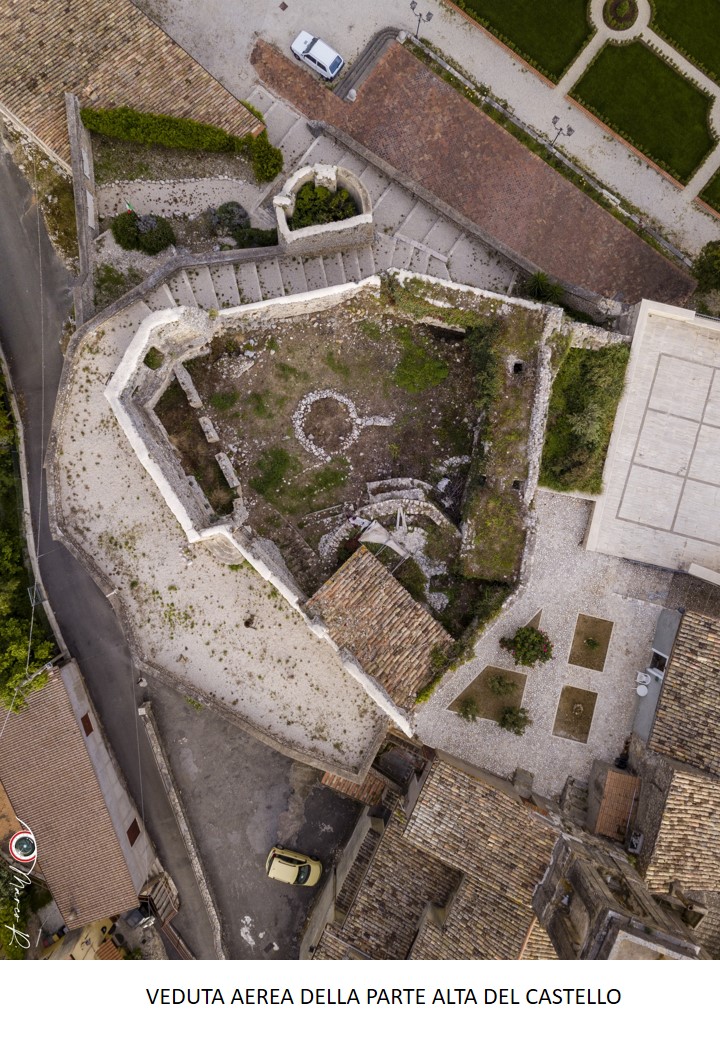
Il castello di Poggio Catino è comunque una struttura abbastanza complessa che nel corso dei secoli ha subito numerose modifiche e ampliamenti. La parte più alta, completamente scoperta (chiamata “la rocca”), sarebbe il luogo di ritrovamento dello scheletro.

In particolare, il punto di ritrovamento dello scheletro della Dama sarebbe stato a ridosso di uno dei muri di cinta. Il castello attualmente versa in condizioni vergognose e purtroppo non dissimili da molte altre fortificazioni, non solo ruderi, di cui è cosparso il Bel Paese. Con gli agenti atmosferici e con il semplice passare del tempo le mura e le altre strutture interne si stanno sgretolando. Una quindicina di anni fa fu pietosamente depositato un sottile strato di calcestruzzo sulla parte superiore delle mura per cercare di ridurre la caduta inesorabile delle pietre e lo sfaldamento dei muri. Ma per il resto questa meravigliosa fortificazione viene da anni lasciata al suo destino. Basterebbero poche decine di migliaia di euro per metterla in sicurezza e per combattere efficacemente l’opera distruttiva del tempo ma questa importante esigenza di tutela delle nostre radici storiche non viene evidentemente compresa o considerata necessaria dalle istituzioni.

In alcuni luoghi europei, come in Germania Francia o Inghilterra, alcuni ruderi assai meno appariscenti e prestigiosi del castello di Poggio Catino vengono tenuti con religiosa cura e vengono visitati da migliaia di persone ogni anno che, tra l’altro, portano introiti economici rilevanti ai paesi che li ospitano. E questa è esperienza comune. A titolo esemplificativo, il castello di Tintagel in Gran Bretagna, che la leggenda colloca come la famosa “Camelot” della saga di re Artù e dei cavalieri della tavola rotonda, è costituito in realtà da pochi ruderi e da qualche muretto in pietra. Il castello di Tintagel è stato visitato anni fa dagli autori del presente saggio con una conseguente forte delusione. Nulla a che vedere con il castello di Poggio Catino che possiede strutture più imponenti e che ha molto più fascino. Perché allora lasciare lentamente morire una testimonianza storica così affascinante che potrebbe portare lustro e indotto economico (turistico)? Perché ogni anno il castello di Tintagel viene visitato da migliaia di appassionati turisti che spendono i loro soldi nelle decine di negozi di souvenirs, che mangiano e bevono nei tanti locali ispirati ai cavalieri di re Artù e che quindi “mantengono” quasi tutta la popolazione della cittadina, mentre il castello di Poggio Catino è conosciuto praticamente solo dagli abitanti del paese e da una ristretta cerchia di studiosi di storia medievale?  Ma torniamo al castello di Poggio Catino.

Alcuni crimini, forse, possono esservi avvenuti, evidentemente e forse gravi rispetto all’uccisione di una donna ma non per questo non in grado di provocare sdegno negli uomini di buona volontà. Intorno agli Anni Settanta del Novecento, ad esempio, la proprietà del castello e dell’annesso palazzo nobiliare era stata acquisita da una ricca attrice francese, tal Yvonne Fourneaux che fece effettuare diversi lavori di ristrutturazione e in seguito la proprietà del castello passò a una ricca americana, che all’interno del bastione centrale ha fatto costruire con disinvoltura una orribile costruzione abusiva in tufo, addossata e cementata al muro medievale e che contiene dei cassoni per l’acqua in eternit (attualmente in disuso).

In seguito, intorno agli Anni Ottanta, uno degli ex sindaci del paese, Emeraldo De Felice, per realizzare delle case popolari con struttura in cemento armato da concedere presumibilmente ad alcune famiglie del luogo, ha fatto abbattere una parte annessa al castello di epoca medievale che conteneva antichi locali destinati forse a carcere e ad altri servizi dell’epoca. Gli anziani del paese raccontano che in tali locali demoliti ci fossero addirittura iscrizioni e graffiti di epoca medievale. Il progetto di realizzare case popolari venne in seguito bloccato e la costruzione moderna (addossata al lato sud del castello) ospita ora il centro congressi “la Dama Bianca”, uno stridente locale moderno scarsamente utilizzato destinato ad incontri e conferenze.

Auspichiamo che le prossime generazioni di amministratori pubblici possano tentare di salvare e di valorizzare ciò che rimarrà dell’inestimabile patrimonio che la storia italiana ci ha lasciato e che sovente viene lasciato deteriorarsi.

Berita Terkini

Berita Terbaru

Daftar Terbaru

News

Berita Terbaru

Flash News

RuangJP

Pemilu

Berita Terkini

Prediksi Bola

Technology

Otomotif

Berita Terbaru

Teknologi

Berita terkini

Berita Pemilu

Berita Teknologi

Hiburan

master Slote

Berita Terkini

Pendidikan

Resep

Cek Ongkir Cargo

Togel Deposit Pulsa

Daftar Judi Slot Online Terpercaya

Slot yang lagi gacor
Indagini e perizie svolte sula scena del crimine, sullo scheletro e sulla cella che lo contiene. – STUDY CENTER for LEGALITY SECURITY and JUSTICE

Tutta la storia, dunque, stava assumendo dei contorni sempre più sfumati e sempre meno solidi man mano che discutevamo del problema, delle piccole conquiste documentali, degli ostruzionismi che andavamo incontrando o dei sospetti sulla genuinità di tutta quanta l’architettura. Da Biraghi reticente allo scheletro che doveva essere per forza di una donna assassinata per gelosia e dunque bellissima! Un po’ troppo… Decidemmo dunque di proseguire, coinvolgendo anche altri soggetti qualificati che potessero offrirci il proprio contributo per cercare di svolgere una analisi “scientificamente supportata” sull’allestimento della Dama Bianca presente nel Museo Criminologico di Roma a partire dal 1934.

Sopralluogo e analisi del sito del presunto ritrovamento dello scheletro.

L’analisi accurata della presunta “scena del crimine”, ovvero del punto in cui secondo la leggenda sarebbe stato ritrovato lo scheletro è stata condotta nel 2019 da Simone De Fraja. Secondo le affermazioni e le indicazioni di Sergio Biraghi lo scheletro venne trovato nell’area interna della fortificazione, l’area adiacente al prospetto murario rivolto a nord ed all’angolo formato da segmenti murari spezzati in prossimità del saliente che oggi affianca il posticcio accesso al recinto. Biraghi, ed ormai la leggenda, narra che i resti vennero rinvenuti in seguito ad un crollo (si dice di “un torrione”). In quest’angolo di cinta non dovevano essere presenti torri o torrioni, come la struttura ormai semicilindrica esistente poco più ad est.

Questa sezione muraria è forse la migliore conservata sia per elevato che per qualità della tessitura muraria, apparentemente tutta originale e coerente con altri parti del recinto, salvo modesti interventi; inoltre questa porzione mostra in più zone la presenza di un intonaco degradatosi in modo omogeno quindi, sostanzialmente, rimasto complessivamente esposto agli agenti nello stesso periodo di tempo. Non si evidenziano parti relativi a crolli od esposizioni relativamente recenti o comunque sezioni murarie dalla differente conservazione. La parte bassa di quest’angolo della cinta mostra tracce di suddivisione in livelli e l’attuale piano di calpestio appare evidentemente rialzato. Apparentemente posticci risultano i setti divisori oggi in essere (differente muratura, pezzatura e utilizzo casuale del laterizio).

É tuttavia plausibile ipotizzare, in quest’angolo della cinta, l’esistenza di un edificio, una struttura abitativa, a pianta quadrangolare, una parete della quale (quella rivolta a nord) era costituita dallo spesso muro di cinta.

Rimane da spiegare, secondo la tesi del Biraghi, allora cosa fosse qui crollato negli Anni Quaranta, se una torre od un grande edificio abitativo, e come si sia potuto smaltire l’eventuale notevole accumulo di macerie atteso che tutto quanto sembra rimasto fermo da lungo tempo. Appare evidente che il modesto ricetto ricavato in quest’angolo di cinta, nelle forme attuali, sia stato ottenuto in un secondo tempo, e per scopi differenti. Che l’individuo, donna o uomo, sia stato imprigionato, con i ferri costrittivi e fatto morire di stenti (questo narra la leggenda), qualunque ne sia stato il motivo (lasciamo stare gli intrighi amorosi), e successivamente murato vivo per continuare il supplizio o la condanna (come potrebbe suggerire l’esistenza di un contenitore in terracotta per l’acqua e prolungare l’agonia) appare alquanto improbabile. Parrebbe semmai più probabile che lo stesso possa essere stato obliterato nella muratura (si sarebbe dovuto ricavare una nicchia in spessor di muro) una volta deceduto: ma a questo punto apparirebbero superflui i ferri di contenzione che, comunque, non appaiono adeguati allo scopo e non sembrano nemmeno coevi all’epoca in cui si è voluto contestualizzare la leggenda. Già, infatti, la leggenda è posta in un generico XVI secolo, più o meno, sembrerebbe dal sol fatto di aver trovato della ceramica datante. Ma anche sulle sorti di tali reperti non vi è traccia (ad esempio una relazione del rinvenimento e nemmeno nel documento di acquisizione del museo), se non scenica, nell’allestimento museale corredato, vieppiù, di una lucerna in metallo. Di questi reperti di corredo, anche la leggenda, nelle forme più genuine, non parla mai.

Non vi è altrettanta traccia negli Statuti del tempo o nella prassi di giustizia criminale, salvo imponderabili episodi creativi, che qualcuno potesse essere giustiziato e condannato a simile sorte; a meno che non si trattasse di un omicidio il cui corpo doveva essere fatto scomparire in breve tempo e non già il frutto di una sentenza espressione di un giudizio secondo legge. Corpi murati ne sono stati trovati occultati all’interno di pareti, ridotti al minimo ingombro, a volte con la calce direttamente a contatto con i tessuti che si sono conservati (e verosimilmente non avevano i ferri agli arti, una lucerna e una brocca per l’acqua). Soprattutto la calce e l’isolamento anaerobico avrebbero restituito un corpo in condizioni conservative ben diverse. Qualora non fossero state trovati gli oggetti di corredo (scenico), qualora le misure di contenimento fossero state adeguate, a prima vista il ritrovamento sarebbe potuto apparire come una capsula del tempo relativa ad una “prigionia dimenticata” e non ad una condanna con tutto il resto degli orpelli, come richiede la leggenda.

Analisi dei ceppi ai polsi e alle caviglie dello scheletro

Studiando il materiale disponibile in Internet, Simone De Fraja reperì una pubblicazione fondamentale in materia di collezionismo strumenti di contenimento. Contattò l’autore per esporgli la questione della Dama Bianca. J.M. Robin è uno studioso francese, esperto e collezionista, autore di “Entraves, Fers & Menottes”, opera in quattro volumi corredata oltre mille foto di pezzi storici anche appartenenti alla propria collezione. Per nulla sorpreso ed anzi incuriosito dalla richiesta Robin rispose nel giro di qualche giorno:

«J’ai vu les photos, mais il y a pour moi des incohérences. Le squelette a les mains placées dans des menottes beaucoup trop grande ! Ce sont des bilboes ou ceps qui étaient normalement destinés à être placés aux chevilles du prisonnier. Cette pièce ne comporte pas de serrure. Les chevilles sont placées dans des entraves équipées d’une serrure à pêne avec ressort(s) en paillette et clé poussoir. […] Ce moyen de contention est apparu au XVIe siècle et à été utilisé jusqu’au XVIIIe. Mais cette pièce était conssue pour les chevilles des prisonniers et non pas pour les poignets! De plus, la teinte de ces pièces me semble avoir été repeintes en noir, ce n’est pas la couleur d’origine du fer. (voir photos jointes). Il est clair que les poignets pouvaient facilement sortir du bilboes. Je pense qu’il s’agit ici d’une mise en scène pour décor d’une cellule d’époque». (traduzione): «Ho visto le foto, ma ci sono incoerenze per me. Lo scheletro ha le mani entro manette troppo grandi! Questi sono vincoli o ceppi che erano normalmente destinati a essere collocati alle caviglie del prigioniero. Questo strumento non ha una serratura. I tasselli sono posizionati in catene provviste di un chiavistello con molla e chiavetta. […] Questo mezzo di costrizione apparve nel sedicesimo secolo e fu usato fino al diciottesimo. Ma questo pezzo era concepito per le caviglie dei prigionieri e non per i polsi! Inoltre, il colore di questi pezzi mi sembra sia stato ridipinto di nero, non è il colore originale del ferro. (vedi foto allegate). È chiaro che i polsi potrebbero facilmente uscire dai ceppi. Penso che questa sia una messa in scena per una cella d’epoca (lunedì 24/12/2018 10:22)».

Simone De Fraja chiamò in causa anche l’amico Massimiliano Righini, attuale Vicepresidente della Sez. Emilia Romagna dell’Istituto Italiano dei Castelli, qualificato studioso di oplologia, che fornì queste riflessioni sui ferri che cingono i polsi nell’allestimento Dama Bianca nel museo criminologico di Roma:

«…come anticipato per le vie brevi cercherò di fornirti alcune considerazioni, basate solo sulla mera analisi delle immagini, in merito allo scheletro di donna ritrovato negli anni trenta nel palazzo di Poggio a Catino, e ad oggi esposto presso il Museo Criminologico di Roma. Lo scheletro presenta, ai polsi ed alle caviglie dei ceppi di costrizione, denominati nella letteratura specifica anche come “gambali”, ideati per essere utilizzati negli arti inferiori. Questi erano costituiti da un perno centrale su cui si infilavano gli anelli di costrizione. Un lucchetto posto ad una delle estremità serrava il tutto. Lo stesso sistema poteva essere impiegato per la costruzione di manette che impiegavano anelli di contenzione più stretti. Sullo scheletro di Poggio a Catino sono presenti due strumenti di contenzione del tutto simili a cavigliere. Infatti anche quelli che serrano i polsi, anche se forse leggermente più piccoli rispetto agli altri, sembrano troppo grandi per poter bloccare con efficacia i polsi di una donna. Entrambi i ferri si presentano nelle forme diffuse, nel mondo occidentale, a partire dal XVIII secolo con una continuazione di uso sino all’inizio del Novecento. Un riscontro iconografico di questi strumenti è possibile con quelli raffigurati da Francysco Goya in due acqueforti databili tra il 1808 ed il 1814. Lo stato di conservazione è cattivo, entrambi presentano una forte corrosione superficiale forse frutto di un ritrovamento archeologico……»

Perizia di Priscilla Zanutel sul presunto sesso dello scheletro

La valutazione sul sesso della persona a cui apparteneva lo scheletro conservato nel Museo Criminologico rappresentava un importante, forse determinante accertamento per valutare l’attendibilità dei racconti sulla Dama Bianca. Il team ha quindi richiesto una relazione “formale” antropologica della D.ssa Priscilla Zanutel, Archeologa e Presidente dell’A.P.S. Rerum Memoria (Roma) che per il suo lavoro ha maturato una certa esperienza sullo studio di reperti ossei anche molto antichi. Questo il testo della sua relazione riportato integralmente.

«…L’incarico di studio è giunto da parte dell’equipe sui cold cases del C.S.L.S.G. sul presunto omicidio di una donna, omicidio che alcune fonti letterarie e giornalistiche farebbero risalire tra la fine del 1400 e l’inizio del 1500. Lo studio è avvenuto attraverso una disamina su dei reperti fotografici e l’obiettivo primario del mio incarico era quello di cercare di stabilire con buona approssimazione il sesso dell’individuo in questione. Questa tipologia di esame, per essere particolarmente accurata, richiede in verità uno studio diretto sugli elementi ossei; ma poiché questo non è stato possibile, a causa dell’irreperibilità del reperto, dovuta all’impossibilità di accedere ai locali del Museo Criminologico di Roma dove il reperto (lo scheletro) risulta conservato, le mie analisi si sono svolte cercando di prendere in considerazione elementi visibili dal supporto assegnatomi. Dalle immagini fornite non è stato possibile fare una valutazione sul sesso dell’individuo utilizzando il bacino, giacché la sua postura e l’angolazione della foto non ne permettono un’osservazione ottimale. Passando al cranio, quindi, sono stati presi in considerazione degli aspetti con un buon grado di attendibilità: arcata sopraccigliare (A), processo zigomatico (B), processo mastoideo (C), angolo goniale (D). L’arcata sopraccigliare (o sopraorbitale) si presenta molto robusta e marcata; il processo zigomatico è anch’esso poderoso e spesso; il processo mastoideo è molto grande e pronunciato; la mandibola è robusta e l’angolo goniale (o mandibolare) è marcato. Tutte queste caratteristiche sono proprie degli individui di sesso maschile. Con buona probabilità quindi, si potrebbe affermare che il corpo preso in esame sia appartenuto ad un uomo anziché ad una fanciulla.»

Berita Terkini

Berita Terbaru

Daftar Terbaru

News

Berita Terbaru

Flash News

RuangJP

Pemilu

Berita Terkini

Prediksi Bola

Technology

Otomotif

Berita Terbaru

Teknologi

Berita terkini

Berita Pemilu

Berita Teknologi

Hiburan

master Slote

Berita Terkini

Pendidikan

Resep

Cek Ongkir Cargo

Togel Deposit Pulsa

Daftar Judi Slot Online Terpercaya

Slot yang lagi gacor

UK VAT rates and VAT FAQs

For your business, you are probably charged VAT on most of the goods and services you buy.

That means charging your customers VAT, keeping VAT records and paying the VAT you’ve collected to HMRC.

Read this article to learn more about VAT.

Here’s what we cover:

What is VAT?

Value Added Tax, or VAT, is a tax applied to goods and services.

Sometimes VAT is called a consumption tax, because it’s applied to end consumer purchases.

It’s applied by the individual or business selling the goods or services as a percentage on top of the sale price. In other words, if something is sold for £1, then the price charged to the consumer will be £1.20 (if the 20% standard VAT rate is applied).

VAT is important because it’s one of the biggest single forms of government revenue, representing 6% of national income. Worldwide, it accounts for 20% of tax revenue for governments.

It’s important for businesses because registering for VAT often lets them reduce the amount of VAT they pay on their own purchases.

In the UK, VAT is applied by businesses or individuals on behalf of the government. The business or individual must report the amount of VAT they’ve both collected and also paid via periodic VAT returns.

Typically, these are submitted every three months (quarterly), but some businesses submit them monthly or annually.

Following submission of the VAT Return, the business or individual must pay the balance of the VAT to the government. That is to say, they pay the VAT they’ve collected minus the VAT they’ve been charged by others.

Only businesses or individuals that have registered for the VAT system can charge VAT. Registration is mandatory once the turnover of the business reaches £90,000.

But it’s also possible to voluntarily register for VAT if your turnover is lower than this.

What is the UK VAT Rate?

There are three rates of VAT that are applied depending on what’s being sold.

Sometimes, the situation in which the goods or services are being sold can affect which rate is applied, too.

For example, some disability products can be zero-rated for VAT – but only if they’re sold to people who are disabled.

This is what the current VAT rates are:

It’s important to understand that zero rated isn’t another way of saying something is exempt from VAT, or VAT-free.

You still have to make a note of zero-rated sales or purchases in your VAT accounting, and issue correct VAT invoices if they’re required.

Let’s take a look at how much is VAT in the UK.

John Smith runs an eBay shop selling computer parts he imports from China. One of them costs him £90, and he adds a 30% profit margin.

That brings the retail price up to £117.

When he sells this, he adds 20% VAT, bringing the price up to £140.40.

He works this out by simply multiplying his sale price by 1.2 (and if he wanted to work out a price for something he’s buying minus its VAT component, he could simply divide the price by 1.2 instead – assuming the 20% standard rate applies).

If John sells to another VAT registered business then he still charges VAT in the same way.

However, this is considered input VAT by the purchasing business, and they can use it to offset the VAT they’ve collected on their sales.

John must provide them with a correctly formatted VAT invoice, showing the rate and amount of VAT applied, among other things.

How VAT has changed

VAT was introduced into the UK in 1973 but had been used in Germany and France from the 1950s onwards, where it was sometimes referred to as a goods and services tax (GST).

This is how countries such as Australia, New Zealand and Canada continue to refer to their own VAT-like tax.

Upon introduction in the UK in 1973, the standard rate was 10%. Since then it’s risen and occasionally fallen.

Today’s rate of 20% is the highest that’s ever been applied and has been maintained for a decade, despite continuing political pressure to reduce it.

At one point in UK tax history there was even a higher rate of VAT, charged at 25% (although reduced to 12.5% a little later).

This applied to petrol and items considered luxuries such as fur coats, hi-fi equipment, televisions, and jewellery. However, this rate was abolished in 1979.

Here’s the historic standard VAT rates, starting with the introduction of VAT in 1973:

VAT rates

And here’s the historic VAT rates for the reduced rate, which is much more straightforward:

VAT rates

Who pays VAT?

VAT is paid by consumers on purchases they make from VAT-registered businesses. As such, it’s an end-user tax applied at the point of consumption.

When it comes to handing VAT to the government, that’s the responsibility of VAT-registered individuals and businesses.

They pay the VAT to the government after filing their monthly, quarterly or annual VAT Returns.

Until the deadline for payment, which is usually one month and seven days after the end of the VAT period, the business gets to hold on to the VAT money.

And there’s nothing wrong with putting it into a high interest account, or even using it to help with cash flow (e.g. effectively giving a short term loan to yourself).

You just have to make sure the money will be available when it’s needed to pay the VAT bill.

VAT is one of a small number of tax systems that turn businesses into unpaid tax collectors for the government.

However, the benefits of being able to claim back tax spent on purchases makes this worthwhile.

What is the UK VAT registration threshold?

Businesses with a VAT taxable turnover above a certain amount must, by law, register for VAT.

The exception to this is if the business only sells goods or services that are exempt from VAT.

The current VAT threshold is £90,000. If your turnover for which VAT applies goes over this, you are required to register for VAT.

The government says there are fundamentally two ways to measure if you’ve passed the threshold, or will do so soon.

Either can be true to require you to register for VAT:

  • You anticipate going over £90,000 in VAT taxable turnover in the next 30 days.
  • Your VAT taxable turnover was more than £90,000 over the past 12 months (a rolling 12 month period from today’s date, rather than a calendar year).

It can be difficult working out when you should register for VAT. Speaking to your accountant can help because they can help forecast your income for the coming period.

But what’s known as the VAT trap arises when a business finds itself crossing the VAT threshold, yet without having charged VAT to customers and without the required VAT accounting.

How to pay your VAT bill

When it comes to handing over the VAT payment to HMRC, you have several options.

Most businesses use direct debit.

This simplifies things significantly and means you needn’t think about it, other than ensuring the funds are available in the correct account at the right time.

However, if you want to keep more control over payments then other options are available, as follows.

But you must remember that some payment methods take up to three working days to be processed (including direct debits), and there might be surcharges too.

Making Tax Digital for VAT simplifies the whole procedure around collecting and reporting VAT by requiring the use of software. This makes it a cinch to know when payments are due. You can learn more about MTD by visiting our MTD hub.

Same day payments

  • Online (Faster Payments, CHAPS or via bank transfer using online banking)
  • Telephone (Faster Payments)

Up to three working days

  • Online (BACS or via debit or corporate credit card)
  • Direct debit
  • Standing order (only for Annual Accounting Scheme, or payments on account)
  • In person at your bank or building society

You may need to speak to your bank or building society ahead of time to see if they’re signed up to the Faster Payments system.

How to charge VAT

Charging VAT is pretty simple. You just add the relevant VAT percentage to your sale price, which the customer then pays.

For example, you charge the customer £12 for a widget that costs £10 and has VAT applied at the standard rate of 20% (i.e. £10 + 20% = £1.20).

There’s no legal requirement to list prices including VAT but not doing so might incur the wrath of the Advertising Standards Authority.

Because not including VAT in listed prices is so common, they include the requirement in their Committee of Advertising Practice guidelines.

However, if you mostly sell to other businesses, you might list prices without VAT provided this is clearly indicated.

If your customer is also VAT registered then you must provide a VAT invoice. This differs from standard or basic invoices because, by law, it needs to contain additional information.

For those using the basic VAT system, it should include the following:

  • A unique invoice number.
  • The time of the supply (that is, the goods or service you sell).
  • The date of issue of the document (required only if this is different to the time of supply).
  • Your name, address and VAT registration number.
  • The name and address of the person to whom the goods or services are being supplied.
  • A description sufficient to identify the goods or services supplied. Each description should list the quantity of the goods or the extent of the services, and the rate of VAT and the amount payable, excluding VAT.
  • The total amount payable, excluding VAT.
  • The rate of any cash discount offered.
  • The total amount of VAT chargeable, expressed in sterling.
  • The unit price.
  • The reason for any zero rate or exemption.

Understanding VAT terms and phrases

VAT has its own terminology, which can be very confusing. So here’s some simple definitions to help you get to grips with charging, reporting, invoicing and paying VAT.

Input VAT

The VAT you pay on purchases that you can subsequently claim.

Output VAT

The VAT you charge on sales.

VAT Return

The periodic tax returns you must submit to HMRC as part of your VAT obligations. Nowadays this must be done digitally, via software, as part of the Making Tax Digital for VAT rules. The VAT Return contains nine boxes that you fill in, as applicable.

VAT period

The period for which you calculate and then report VAT via a VAT Return. Typically this is quarterly (every three months), but it can be monthly or annually depending on the needs of your business.

If you’re unsure how to calculate VAT, visit the HMRC for expanded information.

Or if you have a simple calculation to do, you can make use of a VAT calculator.

Supplies

The goods and services you sell. For example, if you sell a widget to a consumer, then you have made a supply.

Inputs

The goods or services you buy to which VAT is applied by the seller.

Flat rate scheme

An alternative to calculating VAT where you instead apply a flat rate percentage to your total turnover. This makes things simplifier but could mean you end up handing over more VAT than you would otherwise.

Tax point

The date when the supply of goods or services is deemed to have taken place for the purposes of VAT accounting.

VAT invoice

An invoice that lists items such as the rate and amount of VAT, plus your VAT registration number. Supplying one each time isn’t a legal requirement but customers can request one, and any individual or business that’s VAT-registered should do so.

Threshold

The turnover amount for you or your business beyond which you’re legally required to register for VAT. Currently this is £90,000 and it applies only to the VATable goods or services you sell (this should be applied to total VATable turnover and not just profits). The threshold typically increases yearly.

Retail schemes

Several alternatives to calculating VAT that simplifies VAT accounting for retailers. Included is the point of sale scheme, which lets you more easily calculate VAT from your daily gross takings (DGT). It also includes two direct apportionment schemes, and two direct calculation schemes.

VAT registration number

The individual number that applies to your business and identifies it for VAT accounting purposes.

Distance selling

Before Brexit, sales to countries in the European Union (EU) were referred to as distance sales. Following Brexit, only sales from Northern Ireland to the EU are considered distance sales for UK businesses. Sales to EU countries from Great Britain and considered exports.

One Stop Shop

A scheme by which you can account for VAT in a single return when selling to consumers within EU countries.

Final thoughts: Getting to grips with VAT

VAT can be confusing but getting to grips with it takes only a little effort, and once you’ve learned what you need to know you can get on with your business just like thousands of others in the UK.

Don’t forget that seeking expert help is always a good idea.

Accountants and other tax experts work with VAT day in, day out. Speak to them if you’re struggling with any of the details, or how to implement VAT within your business.

Editor’s note: This article was first published in August 2017 and has been updated for relevance. 

Berita Terkini

Berita Terbaru

Daftar Terbaru

News

Berita Terbaru

Flash News

RuangJP

Pemilu

Berita Terkini

Prediksi Bola

Technology

Otomotif

Berita Terbaru

Teknologi

Berita terkini

Berita Pemilu

Berita Teknologi

Hiburan

master Slote

Berita Terkini

Pendidikan

Resep

Cek Ongkir Cargo

Togel Deposit Pulsa

Daftar Judi Slot Online Terpercaya

Slot yang lagi gacor

Un articolo del Giornale d’Italia del 1933 e una presunta pista per la soluzione del caso – STUDY CENTER for LEGALITY SECURITY and JUSTICE

Su “il Giornale d’Italia” dell’11 gennaio 1933 è stato rilevato un interessante articolo di stampa che documenta una circolare inviata dal Guardasigilli a tutti gli uffici dipendenti per cercare di reperire oggetti utili a rendere interessante il museo criminologico da poco inaugurato e che potrebbe essere rilevante per comprendere le ragioni di un eventuale “inganno” che si è celato dietro all’allestimento della Dama Bianca. Questa la trascrizione integrale dell’articolo.

«Il Museo criminale di Roma e la sua costituzione.

Il Guardasigilli ha diramato agli Uffici dipendenti una circolare per lo sviluppo delle raccolte del Museo criminale, aperto in Roma per tenere a disposizione degli studiosi quegli oggetti di particolare interesse che direttamente o indirettamente si riferiscono alla criminalità, cioè sia quelli che sono serviti alla perpetrazione dei reati, sia quelli che offrono la visione del processo di evoluzione dei nostri istituti penali e penitenziari. Il Museo che è in via di completamento, conserva per sua base una tripartizione: esecuzione del delitto, attività statale per l’accertamento del reato e per la condanna del reo, esecuzione delle pene e delle misure di sicurezza. La prima parte dovrà suddividersi in sezioni corrispondenti alle grandi categorie dei delitti, riattaccandosi possibilmente alla distinzione stabilita dal nuovo codice, di delitti commessi con violenza e delitti commessi con frode. La seconda parte dovrà riferirsi a quell’attività statale, che va dai sistemi di indagini della polizia giudiziaria alla ricerca delle prove in sede giudiziaria sino alla condanna. La terza parte sarà destinata a raccogliere tutto quanto interessa l’esecuzione penale, sotto due punti di vista e perciò in due sezioni distinte, l’una riguardante l’azione dello stato nel periodo dell’esecuzione penale, l’altra attinente agli effetti dell’esecuzione sulle persone dei condannati. Il ministro richiama in modo speciale l’attenzione sulla necessità che sia dato conveniente sviluppo alle raccolte che formano la seconda parte del Museo, la quale è intesa a illustrare particolarmente l’attività della magistratura. Pertanto il Ministro invita le autorità dipendenti a segnalare al Ministero quegli atti interrogatori, confronti, ispezioni, esperimenti, perizie, verbali d’udienza, sentenze ecc., che per la loro importanza eccezionale siano meritevoli di essere conservati nel Museo Criminale, allo scopo di offrire agli interessati la possibilità di esame e di studio. L’importanza dei documenti va determinata sia a riguardo del valore intrinseco di essi, sia in rapporto ai riflessi sociali e politici inerenti al procedimento al quale i documenti si riferiscono. Le segnalazioni dovranno essere accompagnate da una precisa descrizione…»

Tutto questo era davvero interessante ed era in grado di fornire alcune spiegazioni alla nostra leggendaria storia ed alle sue origini; una sorta di movente. La necessità di trovare oggetti utili per il museo potrebbe aver spinto proprio Umberto Biraghi, Medico e all’epoca personaggio molto vicino ai vertici del regime (gestiva a Roma una clinica ostetrica molto in voga tra i gerarchi romani), al “recupero” di uno scheletro nella zona di Poggio Catino, utilizzato poi per l’allestimento della Dama Bianca.

Del resto all’epoca del presunto ritrovamento, Umberto Biraghi era impegnato nella ristrutturazione nel paese sabino di un vecchio convento (trasformato in scuola di infanzia) che conteneva presumibilmente anche sepolture di frati ospitati dalla struttura. Non si può quindi escludere che il Medico avesse all’epoca la disponibilità di alcuni scheletri che oltretutto nessuno avrebbe reclamato in caso di scomparsa.

Berita Terkini

Berita Terbaru

Daftar Terbaru

News

Berita Terbaru

Flash News

RuangJP

Pemilu

Berita Terkini

Prediksi Bola

Technology

Otomotif

Berita Terbaru

Teknologi

Berita terkini

Berita Pemilu

Berita Teknologi

Hiburan

master Slote

Berita Terkini

Pendidikan

Resep

Cek Ongkir Cargo

Togel Deposit Pulsa

Daftar Judi Slot Online Terpercaya

Slot yang lagi gacor